Published on artasiapacific.com
Hu Yun: Mount Analogue
Rockbund Art Museum
Shanghai
When passing by the newly refurbished facade of the Rockbund Art Museum, one might notice the abnormal flicker of a ceiling-light from the museum’s fourth-floor window. After thorough observation, this seemingly dysfunctional light reveals itself as an elusive art piece, as if sending out a cryptograph awaiting to be decoded. Titled Wind Calls (2024), this site-specific intervention is a part of “Mount Analogue,” Hu Yun’s first solo museum exhibition and first midcareer retrospective in China. The exhibition title is taken from René Daumal’s eponymous adventure novel, about an expedition to a mystical mountain that “hollow” transparent men inhabit. In the exhibition’s guidebook, Hu thus offers three “expedition routes” of varied duration and difficulty levels that gamify how audiences navigate his disarranged works, obfuscating messages about knowledge representation under colonial epistemology.
In Wind Calls, Hu invited a 90-year-old man to read aloud in the Taishan dialect the names of indentured Taishanese laborers in 1860s Australia, whose names the artist found on a list in the Golden Dragon Museum of Bendigo. The list was drafted by Australian officials and registered in alphabetical order, in a dialect combined with English. Hu synchronized the light flickering to the man’s tone variations as he read, juxtaposing the indiscernible phonetic spellings of dialects and a ghostly flicker within one visual-sound installation. This obscure work may seem to provide minimal clues to the viewer, but Hu’s arcane conversion of historical documents—in this case, from text to sound to light—marks the artist’s signature practice of “digesting” archives and found materials from his long-term research in colonial and modern Chinese history.
Hu’s elusive practice is evident throughout the exhibition. Without reading the caption or guidebook, for instance, a viewer would never connect the overexposed photo papers in Everything Is Possible in the Darkness (2016) with the artist’s grandfather throughout different life stages, or Unregistered (2024) with Chinese miners in Australia, despite its paper blocks being water-colored by extracts from plants growing nearby the historical mining sites. The seminal art historian and critic Claire Bishop once posited that “superabundance”, or information overload, is a critical problem within research-based art. In contrast, the issue with most of Hu’s works is superscarcity: the artist constrains his personal interpretation when confronting historical events and conveys too little information for the audience to decode the work.
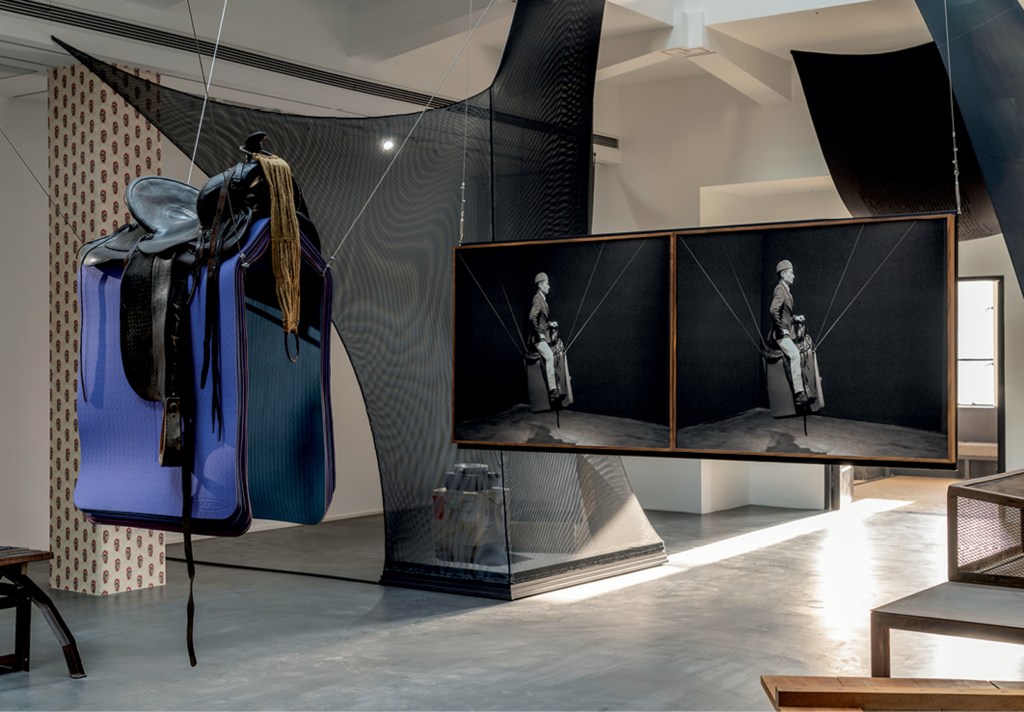
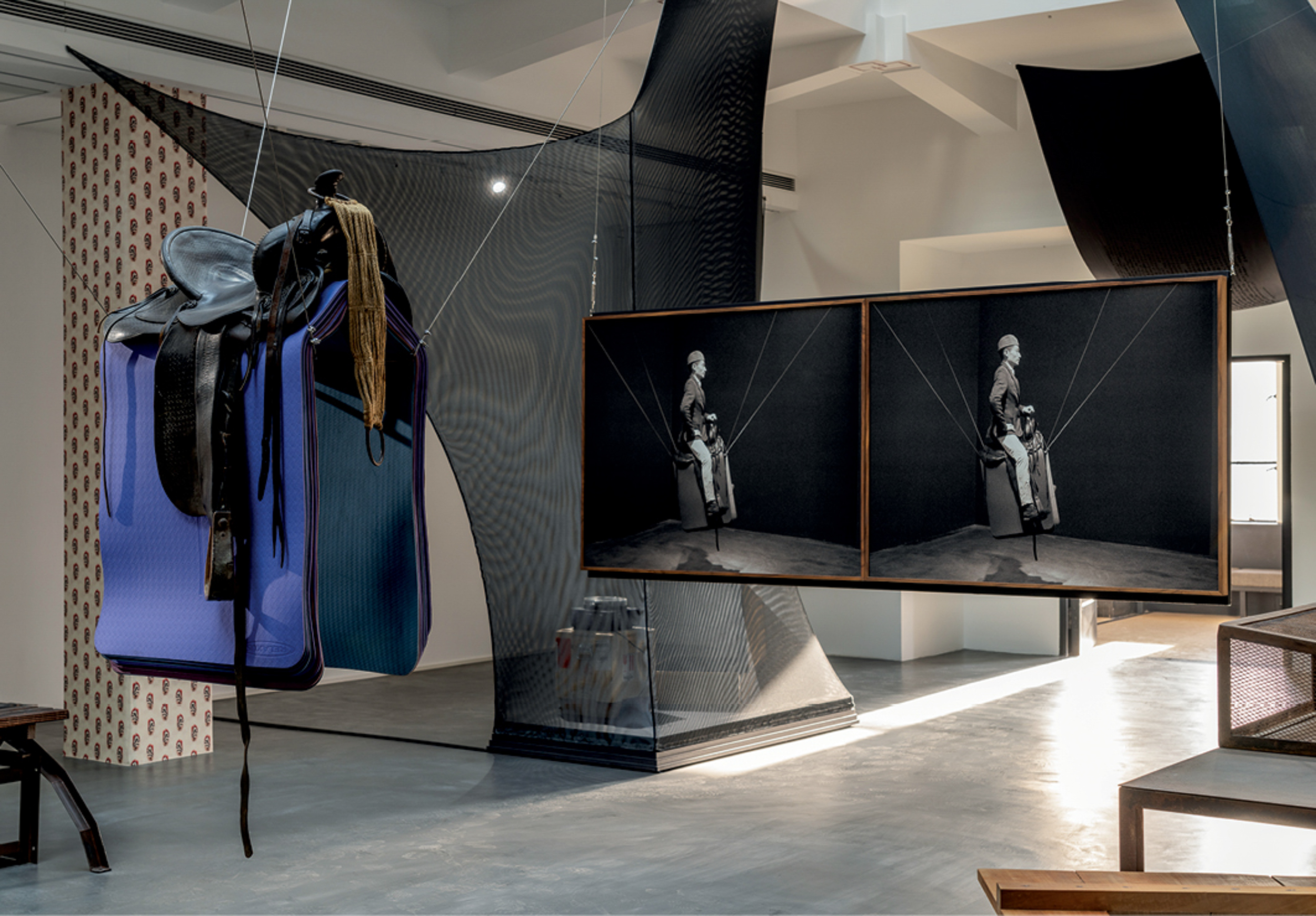
While Hu’s paper-based practice is ambiguous and cryptic, two other works manage to create embodied experiences through sensual material qualities. Address Unknown (2018) features black-on-black silk embroidery depicting texts from the eighth-century stele inscription of Nestorianism’s arrival into China (circa the Tang dynasty). Rendered in a tender silk texture, the inscription is only discernible through changes in light and angles, bringing a sense of softness to the concrete history the stele once represented. In Hollow-Men (2024), the stacking of black-and-grey elastic mesh forms four site-specific hollow structures enveloping display apparatuses and former specimen cabinets. As the four mixed-media works were placed throughout the same floor, of the same building, that the former Royal Asiatic Society Museum occupied in the 1930s, Hollow-Men both echoes and shrouds its history. This further alludes to Daumal’s novel, in which the hollow men’s transparent bodies exist between the perceptible and the invisible.
Hu’s research-based practice invites viewers to form their own historical narrative as an act of decolonization and resistance to the Western gaze. However, most of the works in “Mount Analogue” are presented in a typical white-cube exhibition style, a colonial tradition of Western art that was sustained through the retrospective’s theme and narrative. Despite Hu’s efforts to assuage highly abstract analogies in his artworks, one may feel defeated by the ambiguous and futile effort of their “expedition.”
 Ling Gu